5/06/2011

The Television Image and the Image of the Television


Next weekend I will be at the Media in Transition 7 conference at MIT, where I am giving a paper called "The Television Image and the Image of the Television" (pdf) about flat-panel HDTV sets. This work is part of the book I have been writing with Elana Levine, Legitimating Television: Media Convergence and Cultural Status, which we are told will be published in September (though the copyright will be 2012). The full paper has been posted as a pdf at the conference website. If you come hear me present at the conference, you will get to see lots of pretty pictures of HD television sets, like the one above from the March 2011 issue of Dwell. My paper identifies the switch from 4:3 CRT sets to 16:9 flat-panels as one facet of the wider cultural legitimation of television during the era of media convergence. It addresses the upscale and masculinized sophistication of the new sets, and their significance for TV's convergence with cinema and gaming.

4/30/2011

Mad Men Class

In the past few weeks I have begun to teach an independent study with Lynn Reed, a student in the Master of Arts in Liberal Studies program at Skidmore College. The topic is Mad Men: Serialized Television Narrative and Depictions of Social History in the Early 1960s (link is to the class blog). This program allows students to do courses with faculty they approach who have some expertise and interest in topics they want to study, and I'm really grateful to Lynn for getting in touch with me because I have been finding the experience rewarding and (if I can speak for her) I think she has too.

I wanted to mention this here not just to share the syllabus, which I think will be of interest to serious Mad Men viewers, but also to link to Lynn's writings on the show and related readings, and to publicize her good work. Thus far she has written about character motivation in serialized narrative, character goals in the episode "Nixon vs. Kennedy", the dislocation that comes with cultural change, Reisman's ideas about conformity as applied to Don Draper, and "cool" in the 1960s, among other topics.

The course description to follow is Lynn's. The readings and viewings were put together collaboratively.

Mad Men: Serialized Television Narrative and Depictions of Social History in the Early 1960s

The acclaimed cable television drama Mad Men depicts the process of cultural change in early 1960s America through narratives of the personal and professional lives of men and women in a New York City advertising agency.

The series two most central protagonists, creative director Don Draper and secretary-turned-writer Peggy Olson, are attempting to:
-re-make themselves and re-tell their own stories,
-while working in an advertising industry that defines desires and creates narratives to sell products,
-at a time in which the country is re-making itself, re-telling the story of what it means to be an American and who can participate in the telling of that story

In this independent study, we will examine both the social history of the early 1960’s, and the ways in which this serialized television narrative tells the story of cultural change in this period (1960 – 1965).

From that examination, we will also look at larger questions. Contemporary politics and popular culture debate the meaning of “the sixties” through broad symbols and shorthand references. Does this study of Mad Men and the social history of the early 1960s tell us something about the current cultural fault lines that are seen as resulting from “the sixties”? Can it tell us something about which cultural changes have been accepted and absorbed by American culture and which are still up for debate?

Reading and Viewing Assignments:

The book Mad Men: Dream Come True TV, a collection of scholarly essays on Mad Men edited by Gary R. Edgerton, will be published April 26, 2011. The essays will be assigned reading and integrated with the syllabus as appropriate. (MN note: this is the language as we drafted it in the syllabus; this book has now been published and I just got my copy this week.)

Week 1-2 -- Overview of Television Storytelling & Serialized Narrative

“From Beats to Arcs: Towards a Poetics of Television Narrative”, Michael Z. Newman
Storytelling in Film and Television, Kristin Thompson
Serial Television: Big Drama on the Small Screen, Glen Creeber

Mad Men episodes:
1.6 “Babylon”
2.7 “The Gold Violin”
2.12 “The Mountain King”
3.6 “Guy Walks in to an Advertising Agency”
3.11 “The Gypsy and the Hobo”
4.4 “The Rejected”

Week 3-4 -- The “Crisis of Conformity” in the late ‘50s

The Conquest of Cool, Thomas Frank, chapters 1-3
The Lonely Crowd, David Riesman
“The White Negro”, Norman Mailer
The Hearts of Men: American Dreams and the Flight from Commitment, Barbara Ehrenreich

Mad Men episodes:
1.1 “Smoke Gets in Your Eyes”
1.8 “The Hobo Code”
2.11 “The Jet Set”
3.7 “Seven Twenty Three”
4.7 “The Suitcase”

Week 5-6 – Changes in Advertising and American Culture

Conquest of Cool, chapters 4 – 8
The Hidden Persuaders, Vance Packard
A Consumers’ Republic: The Politics of Mass Consumption in Postwar America, Lizabeth Cohen
The Rise of the Creative Class, Richard Florida, chapters 1-2

Mad Men episodes:
3.2 “Love Among the Ruins”
3.13 “Shut the Door. Have a Seat”
4.5 “The Chrysanthemum and the Sword”
4.7 “The Suitcase”
4.11 “Chinese Wall”

Week 7-9 – Feminine Mystique and the early Women’s Movement

The Feminine Mystique, Betty Friedan
A Strange Stirring: The Feminine Mystique and American Women at the Dawn of the 1960s, Stephanie Coontz
Sex and the Single Girl, Helen Gurley Brown
Bad Girls Go Everywhere: The Life of Helen Gurley Brown, Jennifer Scanlon
Shaky Ground: The Sixties and Its Aftershocks, Alice Echols, chapters 1-4

Mad Men Episodes:
1.3 “Ladies’ Room”
1.13 “The Wheel”
2.6 “Maidenform”
3.8 “Souvenir”
4.9 “The Beautiful Girls”


Week 10-12 – Political Change and Social Change / Re-telling the American Story in the Early 1960s

Sixties: Years of Hope, Days of Rage, Todd Gitlin, chapters 1-7
Port Huron Statement
Parting the Waters: America in the King Years 1954-1963, Taylor Branch

Mad Men Episodes:
1.12 “Nixon vs. Kennedy”
2.13 “Meditations in an Emergency”
3.3 “My Old Kentucky Home”
3.12 “The Grown-Ups”
4.13 “Tomorrowland”

4/07/2011

Indie Promotion

The Columbia University Press website has published some of my work online, and I just wanted to alert those of you not following my every thought and link on twitter to these two items:

1. Indie's introduction has been posted for all to see. It begins:

Like so many cultural categories, indie cinema is slippery. The same term refers not only to a diverse body of films spanning more than two decades, from Stranger Than Paradise (1984) to Synecdoche, New York (2008) and beyond, but also a cultural network that sustains them. This book is about American indie cinema as a film culture that comprises not only movies but also institutions—distributors, exhibitors, festivals, and critical media—within which movies are circulated and experienced, and wherein an indie community shares expectations about their forms and meanings.

To read the rest, click on over.

2. The CUP blog has posted an interview with me. It starts off like this:

Question: Why “indie” rather than “independent”?

Michael Newman: At some point, maybe in the 1990s, indie became a kind of catch-all for describing edgy, youthful, subcultural, or alternative culture...

The rest is on the CUP blog.

3/22/2011

Indie: An American Film Culture


My book has been published! Woo hoo! It was on the table of the book room at the recent Society for Cinema and Media Studies conference in New Orleans, where at least eight people got to take a copy home. I'm told the date retailers can sell the thing is April 12, though they are taking orders. If you want to buy it directly from CUP, follow the link above and use the promo code INDNE for a 30% discount.

Columbia UP's publicist emailed me to see if I can help promote the book by posting to listservs, alerting my social networks, etc. Yes I can do that!

This post is going to take you BEHIND THE SCENES of the thrilling production process of an ACADEMIC MONOGRAPH!!! I have been saving some of these tidbits for years, carefully guarding them until this day.

-The idea for the book was suggested to me circa 2002 by my graduate school advisor, David Bordwell at a restaurant in Madison called The Saz that no longer exists. I wanted to write a dissertation about narrative theory and in particular about character, and he thought independent cinema would offer a good body of work within which to explore my ideas. These things take time. The dissertation was completed in 2005, and in the meantime I had a child and found my interests expanding into television and new media and taste and cultural studies. I have found that parenthood is a great motivator. I waste much less time when someone else is looking after my kid while I'm supposed to be working. People think having a baby around must kill your productivity, and maybe it's my male privilege speaking, but I have found it to be the opposite.

-The title changed a few times. When I proposed the book to CUP it was to be called Indiewood: Storytelling in American Independent Cinema. I changed it when I saw storytelling becoming only one aspect of the work rather than a singular central focus. I also didn't want the book to have the same title as Geoff King's Indiewood, USA, and I saw "Indiewood" as too specific a term, leaving out what some see as the "true" indies. My wife, Elana, suggested the title Indie. I'm pretty sure the An American Film Culture part was mine. At one point I wanted to rename the book Home is Where the Art Is, which is the title of a chapter about film festivals and art house theaters and a headline from a NYT article about independent cinema from 1989. My editor at the press thought it was a bad idea, and I think she was right.

-As in any long-simmering project, this book is the product of an abiding personal interest and a connection with many events in my life. In some ways this is the ultimate expression of my youthful cinephilia, which in most ways I have outgrown. When I was in my late teens and early twenties I was eager to be initiated into the world of serious film passion. The first film I ever saw at a film festival was Jarmusch's Mystery Train, at the 1989 Toronto festival with the director and Screamin' Jay Hawkins in attendance. I worked managing the candy counter of the Carleton Cinema around that time, where Do the Right Thing and sex, lies, and videotape were playing (along with Jesus of Montreal, 36 Filette, The Little Thief, as well as some more popular titles like When Harry Met Sally...). After moving to New York in 1994 I became a pretty passionate follower of independent film, regularly spending weekend afternoons at the Angelika. In some ways the book is an effort to make sense of one kind of cinema that was part of what made me want to become a film -- later media -- scholar. I have never thought of myself as a fan of independent films per se, and I have probably been a bigger fan of studio-era Hollywood and some foreign cinema (at times, Godard, Bergman, Antonioni, Ozu, Kiarostami, 1980s Hong Kong action films). But having seen so many of the canonical indie films, the ones like sex, lies and Pulp Fiction, at an impressionable age, the centrality of this form of cinema to my conception of artistic film practice was pretty important. Later I would see this in a context of a film culture producing distinction for its elite audience, but having a critical perspective on indie's social functions hardly diminishes my feeling for some of these films.

-Maybe some processes are quicker and easier, but my revision process was slow and painful. Between proposal and proofs stages, there were at least four readers who wrote reports. The shape of the project shifted as my interests developed toward more of a concern with social issues and less with narrative. I like how it turned out, but it took a long time to get there. One thing I'm especially pleased with is how Indie balances two senses of culture: as works to be analyzed, and as social ways of knowing and experiencing. A film culture functions in both of these senses, and I try to combine an analysis of indie's value as a cultural category, and its coherence as a body of films calling on a coherent set of expectations about form and meaning. When I say film culture, I always mean both of these things.

-I am pretty pleased by the cover. I suggested images from Lost in Translation and Juno, and for various reasons the press preferred Juno. One reason I like seeing her on the cover is that Juno is both a film I liked a lot, and a great example of the contentiousness of indie as a cultural category. As I discuss in the final chapter, Juno is an example of a movie that some members of the indie community sought to de-authenticate, to remove from consideration as indie because of its heavy marketing by Fox Searchlight, its mainstream appeal, its lack of indie bona fides. One of my central claims about indie cinema is that it's a slippery, contested category, and that it can only be understood as it is used within indie film culture. I would not exclude it because it is so widely thought to belong, but the efforts of some critics and bloggers to distance themselves from Juno (and of many people I have talked to personally) reveals much about the values sustaining independent cinema. I suggested handwritten for the type but the designer did it better than that, and gave it more of a DIY scissors cut-out look.


This is the Lost in Translation image I had suggested. Pretty but not really fun. Related: I use the term bokeh in the chapter where I discuss Lost in Translation to describe the effect of out-of-focus abstract shapes of lights like we see in this image. That's one of my favorite words in the book, just cuz.

-Some people have asked how it feels to have a book published. It's kind of like asking how it feels to be 39 years old. I knew it was coming for a long time, and it's not that different from before. But publish means to make public, so now I have this sense that what I have done is out there and outside of my control, and I like that. It means my work is done. It belongs to you now.

3/14/2011

Free TV? Television File-Sharing, Media Convergence and Cultural Status

Update November 2, 2011: The longer and peer-reviewed version of this essay has been published online in Television & New Media, DOI 10.1177/1527476411421350. If you want to quote or cite this, I recommend the TV&NM publication.

I gave this paper on Saturday at the Society for Cinema and Media Studies conference in New Orleans. It's an elaboration of some ideas I wrote awhile back in Flow. I have been researching this topic for a couple of years and the 2011 conference gave me the opportunity to turn it into something more substantial; there's a longer version soon to be submitted to a journal. This is work in progress, and your comments are welcome.

Television has always been free, and the cultural status of television—despite shifts in recent years—endures as a product of the over-the-air model. Free TV is of course commercial, and we pay indirectly, but in the digital age a new kind of free TV has emerged which is removed from the commercial circuit. Television shared as files among peers using BitTorrent and other online means, making TV freer, in some ways, than it ever was. P2P TV is one of many developments in our era of convergence prompting a renewal of television’s place in the popular imagination. Thus my title is meant in two ways. P2P TV is free to the consumer, but it also promises to free television from its identity, from old modes of viewing rooted in earlier technologies. By considering its conflicted cultural implications, my aim today is to understand TV file-sharing as one term in the negotiation of television’s value during the era of digital convergence.

Much has been written about file-sharing over the past decade. [For starters I recommend Lessig, Vaidhyanathan, Gillespie, Litman, Strangelove, and Green & Jenkins in Holt & Perren.] By and large, however, this work has focused especially on music and movies, the two forms of media that appear to be most threatened economically by the disruptions posed by file-sharing. Much of this writing is premised on media industries selling to the consumer. Record labels and movie studios can claim lost revenue if sales of CDs or DVDs are replaced by free P2P circulation. Television shows, unlike recordings and films, are not most often sold directly to the audience. Despite the widespread file-sharing of television content, then, and despite an evidently high degree of concern in the TV industry, the place of TV in analyses of piracy has been marginal.

I see three ways in which file-sharing challenges conceptions of television, rooted in the era of network broadcasting.

First, file-sharing is part of the legitimation of television. In its traditional identity rooted in the network era, television’s cultural status was as feminized mass culture, as a threat to intellectual culture, childhood development, and social cohesion. In some ways the introduction of television into P2P networks, alongside other technological developments, bespeaks the high value of some forms of TV to media consumers eager to locate and select episodes and to devote time and resources to their acquisition and experience. The availability of TV series alongside movies and music is a factor in the rising legitimacy of TV, now seen as equivalent to other media at least in the context of some forms of convergent distribution. The kinds of television shared in P2P networks tends to be the aestheticized, scripted prime time comedies and dramas. Users of P2P networks might come in all shapes and sizes, but the practice is typically linked to youth, masculinity, class, and technological sophistication. One seldom finds the less legitimate and more ephemeral forms of television, feminized and devalued genres such as daytime talk shows and local news, circulating in P2P networks.

File-sharing is further legitimating by transforming the audience for television from supposedly passive viewers into active users. The ability of users to program their own viewing rather than being “slaves to the schedule,” and the possibility of watching television shows purged of commercials, function to legitimate television. Sharing files of episodes is one means of the viewer becoming an advertising-avoiding television programmer. Thus the P2P distribution of television is one among a cluster of technologies of agency, making TV more culturally respectable by masculinizing it, articulating TV with activity and discernment rather than the more feminized and passive characteristics that earlier defined it.

[Aside: TV's legitimation during the era of convergence is the topic of the book I wrote with Elana Levine, Legitimating Television: Media Convergence and Cultural Status. It should be in print from Routledge by the end of the year.]

Second, file-sharing is located in a space of transition from television’s status as a public good to a private good. The culture of file-sharing associates television content with the broadcasting model of distribution, wherein the television text has no price. In some ways file-sharing confirms the value of television as ephemeral and disposable even as it arrests “flow” to make possible sharing TV shows as files. One contradiction of television circulating for free among P2P networks is that this form of distribution at once denies and affirms the value of the text. On one hand, like broadcasts, the shared text is a public good which no one buys or sells. On the other hand, the television industry sees this form of circulation as a potential crisis of lost revenue. The use of P2P networks for television file-sharing reveals an instability in the valuation of TV as it shifts from being a public good, freely available to anyone as it was during the network era, to a private good, available only to audiences who actively choose to enter into terms of commercial exchange.

A third way in which file-sharing complicates traditional conceptions of TV is by extracting the circulation of television content from local or national communities. Media corporations are still defined by national intellectual property and regulatory regimes. The availability of shows from one country in another was once a matter of licensing agreements between firms. Now viewers interested in seeing series from abroad have fast and easy access, and online fandoms congregate as global communities. This new availability has awakened and attuned audiences to the temporality of transnational media flows. Discourses of P2P TV communities reveal a sense of entitlement to television and a frustration with structures that slow or forbid transmission of American shows to viewers in other countries. The transition from local/national to global distribution of TV requires new conceptions of television’s value, thinking of it now as a cosmopolitan transnational culture.

I want to consider these tensions of value between low and high, public and private, and national and global by looking at practices of P2P TV consumption as represented in the online discourses of TV file-sharing communities such as message boards, which frequently make arguments in favor of file-sharing in self-consciously value-laden and often ethical terms. The practical ethical theories of P2P users offer evidence of ways of thinking about television and its cultural status as convergent technologies introduce problems and possibilities never before faced by television consumers.

P2P users might reason that it is ethical to download content not otherwise or legally available. Many believe downloading is justified when one has paid for the content in another format. Some rationales might justify TV, music, and movies alike. But users also establish specific norms for television. In a nightly.net forum, a commenter explains, “I personally don’t hold a lot of guilt for using BitTorrent to download shows. Everything I’ve downloaded…is something I’ve technically paid for in my satellite bill.” Sharers also insist that DVR recordings and downloads ethically equivalent. The difference between recording a show oneself using a VCR or DVR and skipping commercials and downloading a commercial-free file via BitTorrent is regarded as ethically insignificant. In the same comments thread, a user responds, “If you pay for cable and have DVR, then downloading a cable show is no different from recording and skipping through the commercials.” The nature of broadcast television’s business model makes sharing different from music or movies, especially when considering network programming. As one Digg user explains, “The networks BROADCAST their shows, sending them out FOR FREE into the air all over the country. How can they claim that I am stealing if they are giving it away for free?”

Avoiding the cost of cable or satellite subscription or even of owning a television might be paramount. There might also be value found in having a way to watch TV without some of the traditional cultural associations constructing television as degraded and feminized. A reddit discussion on the question “How many redditors don’t watch TV?” inspired a number of telling confessions from community members. The legitimation of the convergence era has opened up new opportunities for television appreciation while distancing a new conception of TV from its old cultural construction. Consider these statements:

-I don’t watch TV but I do download some TV shows.

-I watch a few TV shows but I mostly download them so you could say I watch Laptop.

-My TV is called Pirate’s Bay.

-I was going to ask if torrents of TV shows counted.
No waiting for the local station to pick up a program
No loud annoying commercials
You can download an entire season at a time.

The television reflected in these comments is clearly a residual conception rooted in the technologies of an earlier period. The superiority of new technologies is given as self-evident and as distinguishing a youthful, masculine, and technologically adept community from the mainstream. Many qualify that if they watch TV shows it is not really watching TV. By this logic, file-sharing ameliorates some of television’s basic problems. Within the community of file-sharers, overcoming these issues is good, indeed, doing so has the potential to recuperate television from its low status and make watching TV more legitimate.

Even with DVRs and other legally legitimate technologies, there are obstacles standing in the way of some consumers accessing TV content on their own terms. Shows are not released in all countries simultaneously, and in many countries some content is not available at all. Legal downloads are encrusted in DRM, inhibiting portability and archival value. Media companies release their content in “windows;” DVD content is offered at a later window than transmission on broadcast, cable, or satellite. Webisodes and streaming video are routinely geo-blocked: some sites will work only in some territories. Users abroad trying to access Hulu are greeted with a “not available in your region” message.

File-sharing is thus especially prevalent in countries where access to American shows is limited by windowing and geo-blocking, especially in English-speaking countries such as Canada and Australia. Canadian television viewers have been motivated to start Facebook groups like “TV Fans Against Hulu’s Geo-Blocking Policy” and blogs like “I Hate Hulu.” A reddit thread inspired one Canadian commenter to exclaim, “Fuck Hulu! Bittorrent lives!”

The rationales for geo-blocking may not be evident to users who feel deserving of access to popular culture. A Hulu vice-president claims that “Canadians consider it their ‘birthright’ to have access to Hulu." Geo-blocking is one among many forms of Canadians’ deprivation of popular culture, and whether in the name of IP agreements or cultural protectionism, the experience of Canadians can be characterized by frustration and resentment over the inability to share a common culture with those beyond their borders.* File-sharing ameliorates this sense of being wronged by cultural institutions. Insofar as it finds ways around the legally legitimate obstacles to access, then, P2P file-sharing in Canada and elsewhere is constructed as ethically legitimate because of a sense of justified entitlement to popular culture, as well as a sense of the illegitimacy of this access’s denial. This returns us to a sometimes lost sense of popular culture as culture belonging to the people rather than the corporations who produce and disseminate it. Preserving the people’s access to their culture in the face of corporate and state interference might be a more ethical gesture than preserving intellectual property rights in the name of profits and national sovereignty. By framing TV as popular culture in this sense, rather than as disposable trash or commodified mass culture, the communities of TV fans downloading their shows express a valuation of television.

Because of Australia’s geographical distance from the Anglophone countries, pre-Internet, Australians waited many months or even longer for foreign shows to be seen there, and many series or seasons are still not available Thus one Australian commenter on a tv.com forum asserts, “If your local TV stations don't want to keep up with the latest episodes of whatever it is then shows deserve to be downloaded."

Thanks to file-sharing, Australian fans of shows like Battlestar Galactica are able to participate in fan communities as episodes air in the U.S. This has allowed Australians to overcome some of the distance previously felt from foreign cultures. But when official BSG webisodes are geo-blocked, viewers feel the same frustration as the Canadians. This is especially troubling to viewers avoiding spoilers. The global circulation of media makes simultaneity more imperative to passionate audiences, and this too drives P2P sharing as an ethical imperative. Because spoiler-avoidance functions as an ethic of fan communities, distribution infrastructures denying global simultaneity are effectively spoiling not only the plot, but also an ethical contract among media companies and fans. This helps explain why Australia has more P2P TV sharing per capita than any other nation. (For more on the Australian example, see Tama Leaver, "Watching Battlestar Galactica in Australia and the Tyranny of Digital Distance".)

This consideration of TV file-sharing reveals a number of new positive valuations of television in the context of digital convergence: as more culturally legitimate than it had been, and as a form of global popular culture which finds a hospitable site of community cohesion on the Internet. At the same time, however, the residual reputation of TV as a form of low culture, and the efforts of media corporations to extract revenue from every experience of media, also inform the valuation of television evident in the case of file-sharing.

Because television, unlike movies and music, has long been an example of a public good, because—iTunes aside—the TV consumer is not in the habit of paying per show, the online sharing of television also is marked by distinctions of value which are less flattering to TV, and which in some ways are inconsistent or contradictory with those more positive formulations just considered. The best illustration of this is the sense among file-sharing participants that TV sharing is more ethical than movie or music sharing. In other words, the value of movies and music is constructed in distinction to the value of TV, but in this instance value is monetary rather than cultural or communal. Nevertheless, cultural hierarchy is evident in such judgments.

The gadget blog Gizmodo offers one clear formulation of this relative valuation as a “Pirate’s Code of Conduct” for file-sharing, prescribing formal ethical norms for its technologically sophisticated, masculinized readership. (As a “Pirate’s” code, it is crafted in a stylized lingo.)

"TV is to be downloaded, movies are to be attended when a man returns to shore. If ye aren't a Neilsen family, what you watch doesn't matter for ratings anyway. Since advertisers pay by rating, it's a theft-less crime. Movies, on the other hand, do see profits of gold and jewels. So support independent/foreign film in the theaters, and save the action flicks with high production values and many beautiful explosions for the big screen, too. Hollywood romantic comedies? They are for plundering (in secret)."

The gendered and classed conception of media makes for a set of downloading distinctions keyed not only to ideas about media economics, but also about the relative value of genres and formats depending on placement on the cultural hierarchy. It also strategically ignores the profits sought by TV studios and networks from DVD sales among other ancillary windows, as well as cable subscriptions.

A nightly.net commenter claims to feel no guilt from downloading TV shows, as he skips commercials while watching using his DVR. But movies are different: he will only download them “in the rare case it’s not playing in any theaters in my location.”

Similarly, a Don't Make Me Steal manifesto circulating lately sets clear values for television and movies. The point of this online petition is to encourage practices for media corporations to follow to make legitimate alternatives preferable to file-sharing. Among these is reasonable pricing of media products: making a television series cost 1/3 the price of a film, insisting that content be advertising-free. As we have seen, the conception of TV as free of charge has a strong effect on the ethical calculation involved in P2P sharing of television. Users find it hard to accept downloading of TV shows as free-riding or stealing, and often view advertising-avoidance in positive rather than negative moral terms.

I have argued today that television in this new context of media convergence is contradictory and unstable, caught between its traditional and emergent identities. The network era might have given way to convergence, but the medium is understood in the popular imagination according to terms drawing from both periods. Old ways of knowing cannot be cast aside as quickly as old technologies and industrial practices. The file-sharing of TV content is thus a practice and discourse wherein television’s cultural value can be contested and reassessed as the medium’s identity is renewed.

*My discussion of Canadians' experiences of geo-blocking draws from Ira Wagman and Peter Urquhart, “This Content is Not Available in Your Region: Geo-Blocking Culture in Canada,” in Dynamic Fair Dealing: Creative Canadian Culture Online, ed. Rosemary Coombe, Darren Wershler-Henry, and Martin Zelinger (Toronto: U of Toronto P, forthcoming).

12/31/2010

Faves, 2010


My year has been defined more than anything by being a parent of a very young child, a baby boy born in late November 2009. I saw many of my favorite movies of 2009 on video in early 2010 (A Serious Man and Inglourious Basterds were among them but The Hurt Locker was a disappointment, and none of what I have seen of the '09 vintage impresses me more than Up), and very few of what I expect to be my favorite movies of 2010. I also played a lot of video games, but few of the year's releases. This is in such contrast to earlier times in my life, when I had no television or gaming console, and would see several films a week, and not infrequently more than one a day in the theater. Over the years I have become just as interested in television as an object of study as cinema, and have been spending more home time with TV than movies for several years. With two kids and busy semester business for much of the year, in addition to a number of active research projects, this has left barely an hour a day of audiovisual media consumption in the evenings, which is enough to keep up with a big handful of shows but not a very satisfying condition for consuming motion picture features. I'd like to seem a bit ashamed of how much I have given up watching movies, but I have a hard time seeing greater value in them than I find in television shows.

And more than any other form of media, it's the internet that got the largest share of my attention in 2010. If I had to say what was my favorite thing of all, it would probably be the web in all its various forms and in the many ways I have accessed it -- MacBook Pro, iPod touch, iPad, computer terminals in public places. I was reluctant to become one of those new gadget enthusiasts, the bleeding-edge tech geeks so ridiculously enamored of mere devices. But I often feel excessively for the iPad, which I got late in the summer. It's my best toy since the Wii. It's a portable TV for showing YouTube videos to the baby, an easy way of checking in on email and Twitter from the couch of away from home, and a great format for reading many kinds of prose. I still use an iPod touch all the time too, for reading in bed and carrying in my pocket, and for music much more than the iPad. I would want to give either one of them up.

Of course much of my time this year was spent with culture of the past, and I'm keeping this list 2010 only. As in previous installments, what follows is in no particular order.

***

Definitely Twitter, certainly not Facebook. Amanda Klein recently wrote a very nice appreciation of why Twitter is so appealing and so useful. Someone said Facebook is for the people you used to know, Twitter is for the people you want to know. Twitter is amusing, informative, and sometimes outrageous. I sometimes go to it for advice and conversation, but more than that I find it offers a continual connection with a cluster of overlapping public communities of shared interest. I stay with Facebook because I care about many of the people I keep in touch with there, but I always wish there were a better way to keep us connected.

Terriers was my favorite new show of the season, and I wasn't surprised or even really devastated by its cancellation, which seemed inevitable. I admired its crackling dialog and subtle characterizations, and it eventually made me forget that Donal Logue was the title character in The Tao of Steve. The theme song by Robert Duncan made us dance on the couch once a week. We'll miss you.


Devour is a web video aggregator, a sort of curated best-of-YouTube site where there is always something worth watching. It has an appealing layout, with blurred thumbnails on which simple titles are superimposed. I follow it in an RSS reader, but increasingly RSS reader interfaces are losing their appeal as new forms of aggregation do what they do better. Devour is a good example, as the visual experience of a grid of selected videos beats the listed headlines or river of news you find in feedreaders.

I'm really fascinated by user-generated movie posters, which John August blogged about as "unsheets" (a play on "onesheets"). These are especially intriguing when they are especially minimalist and geometric, or just graphically simple and spare. They often call on your familiarity with a text, but they are also often highly suggestive and appetizing, making the viewer eager to know more. See also minimal movie posters and minimal TV series posters. I guess part of what makes these so arresting is that they're so different from the official posters issued by publicity departments. They might not effectively sell films and television shows to the most desirable audiences, but they allow us to imagine how visual culture might be different if it approached audiences differently.


Girl Talk, All Day. Girl Talk is all about the culture clashes inherent in popular music, making white music more dangerous and black music more palatable to white people. I find it totally audacious and inspiring, and I don't tire of listening even long after the most original and shocking moments have become familiar.

That Rube Goldberg OK Go video, "This Too Shall Pass" (see this interview for more).

30 Rock, which still makes me laugh every time. Honorable mention, among the sitcoms, to Modern Family. I have tried watching Community and Parks & Rec, and I know you probably think I'm lame for saying this but, they irritate me and I don't find them all that funny.


Mad Men
, whose fourth season was as insanely watchable and engrossing as the first three. I'm eager to rewatch on DVD to pay more attention to Megan and Faye, and to appreciate the delicacy with which the story of Don's return to middle-class family life was unfolded. The scene of Don's return to Anna Draper's house, when he tells his kids that Dick refers to him, was especially memorable. Zosia Mamet as Joyce, Peggy's friend in the photo dept at Life magazine, was always fascinating, even more so given that the same actress also had quite different roles on United States of Tara and Parenthood.

Mallory’s Clothes, a compendium of screencaps from episodes of Family Ties. I'm fascinated by the use of screencaps in a kind of vernacular media criticism and appreciation, extending the apparatus of scholarly analysis to ordinary folks. The appreciation of the visuals of this 1980s sitcom strikes me as deeply loving and real.


Nicholson Baker on video games in the New Yorker.

The meta ending of The Hills, a gesture of real fakery in an increasingly unsuccessful representation of fake reality.

In Treatment's third season, especially the genius casting of Amy Ryan as Paul's new shrink Adele who's so hard to read, and Irrfan Khan as Sunil, a patient from Calcutta who wins Paul's admiration and affection but to his own selfish ends.

Parenthood is one of the few network dramas I ever look forward to these days, except I don’t like the whole show, just parts and things it could be -- I like Dax Shepard as a comical leading man type (Crosby) and Sarah Ramos in the Angela Chase role (Haddie) much more than Peter Krause and Lauren Graham, both of them too familiar from earlier roles (I wonder if Nate or Lorelai would have any patience for these two), love classic cute kid Jabbar of course, don’t buy Craig T. Nelson as a Berkeley type, hate the overuse of communal happy endings and little victories you know the network execs love and the writers find tiresome. I think what I really like is that it reminds me of the Zwick and Herskovitz dramas like thirtysomething, My So-Called Life, and Once & Again that I wish were still on the air.

I liked the stoner roommate on Accidentally on Purpose and the curly-haired Jewish kid on Huge, two shows I enjoyed watching occasionally and without paying that much attention.

Pants on the Ground. Best thing about a fairly terrible season of Idol.

Survivor All-Stars was good entertainment, and was especially enjoyable through the filter of snarky Twitter fans like @fymaxwell. Twitter has put "appointment television" back on the agenda, though it seems many of the shows people like to watch all at once come in for some considerable mockery (I'm thinking of The Oscars as well as other awards shows and reality competitions). I generally avoid this stuff not just because I usually really like the shows I watch, but also because we aren't giving up time-shifting so quickly.

The Olympics, especially curling, held my attention last winter. I wish there were more curling on TV at other times. The World Cup was equally consuming. I seem to focus my attention on the aesthetics of sports as much as the play, and with the World Cup I get fascinated by the difference between sports style at home and abroad. For instance, check out the typography on the Italian kit. I was delighted by the vuvuzelas and all the bourgeois consternation they caused. It's always interesting to encounter differing gender norms, as when seeing men like Sergio Ramos in headbands, or the Cameroonian Samuel Eto’o's form-fitting jersey.


Belle & Sebastian, Write about Love. The same catchy melodic lines and melancholy lyrics, the same vocal harmonies and inventive instrumentations familiar from earlier recordings, but now with indelible guest vocals by Norah Jones and Carey Mulligan. I like how the band has moved toward more female vocals but without changing much of what makes Stuart Murdoch's songs so original and catchy.

Movies in Frames, a tumblr blog to which people submit four frames stacked one on top of the other from a film. Sometimes these remind me of a movie I liked by recalling some of the most memorable or arresting images. But just as often they give the impression of having seen an interesting film I probably won't ever see. And they appreciate the qualities of movies as a pictorial art.


The Perfect Getaway


O Cheiro do Ralo (Drained)


Moonstruck


A Woman is a Woman

Molly Young on immersive retail in The Believer, about the aesthetics of stores like Hollister.

Lone Star, a great pilot, really wish it had the chance to become a great show. And thanks for the Mumford & Sons.

The Lady Gaga profile in New York by Vanessa Grigoriadis. I've been listening to Lady Gaga all year. My kids like her too. I still find her videos pretty fascinating and her Larry King interview was amusing, but I find that underneath the pastiche of Madonna and the performance of celebrity is a quality of classic songcraft and vocal performance missing from much of today's pop. When a Twitter friend asked who people thought we'd still be listening to in 25 from among today's artists, I didn't think long before naming Lady Gaga. I already feel like Bad Romance has been stuck in my head for 20 years.

Damages, Martin Short and Campbell Scott in particular as morally compromised men embroiled in scandal.

The Girl who Kicked the Hornet's Nest and its two predecesors, which I read on an iPod touch in a pretty brief period of time. Great character, impressive plotting, sometimes preposterous, unimpressive prose style. I like reading on the iPod because the screen is so small you can turn pages frequently and it feels like perpetual progress.

xkcd, the only comic strip I never miss.

Treme, which started slow and seemed populated by an unnecessary number of obnoxious male characters, but worked its way up to a pretty poignant ending celebrating the human spirit and the vitality of New Orleans culture. The most memorable sequence for me was the montage in the finale set to "My Indian Red."

Scott Pilgrim vs. the World, visually exuberant, and very Torontonian.

The Imperfectionists, a network narrative about the news biz.

Arcade Fire's video "The Wilderness Downtown." I like the album but not as much as the hype made me want to, and as rock music meditations on suburbia go, I still like Billy Joel's Captain Jack.

I don't think I've seen her work in person, but I was glad to read anything about Marina Abramovic at MoMA, like the writeup by Arthur Danto in the NYT.

The Social Network didn't seem like it could have been the best film of the year, but it's images and narrative have stuck with me, and I saw so few films in the theater that I guess it's a fave. I mean, I liked it much more than Eat Pray Love or The Kids are Alright. I still wonder if it would have made any impression at all if it weren't about Facebook -- if the company in the movie were something no one has heard of. I think it would be really boring, but maybe Facebook represents something interesting enough that making a fairly pedestrian movie about it can tap into something vital.

I like the Facebook like button. I wish the whole world were covered in those thumbs you could click on to indicate your approval. Ever since the like button appeared, I find myself in situations in which it would be nice to have the option to just like, and engage no further. People often gripe that there ought to be a dislike button, but I appreciate any effort to keep the internet and the world for that matter civil. (I do not like the things the Facebook like button represents re Facebook's business model, its notion of community, its eagerness to sell my data to advertisers, etc.)

I have a bunch of favorite iPad apps and I'm not that eager to go on about them, but I'll mention a few: Flipboard, Note Taker HD, GoodReader, and Reeder. All are ways of reading certain kinds of things -- Flipboard and Reeder for news, blog, and social network content, NoteTaker and GoodReader for PDF documents. One of my most important uses of the iPad is to read (and annotate) PDFs.

Finally, some favorite blogs or blog-like sites, God bless you all, and here's to oodles of good pictures and words in 2011:
The Awl, News for TV Majors, Antenna, Flow, Ludic Despair, Celebrity Gossip, Academic Style, This Recording, Kottke, Marginal Revolution, Torontoist, Waxy, Boing Boing, By Ken Levine, Seriocity, Observations on Film Art, Just TV, The Film Doctor, flickr blog, The Big Picture, Language Log, Uni Watch, Abstract City, James Fallows, Wordyard, Collision Detection, HRO, Film Studies for Free, Girish, Judgmental Observer, Cultural Learnings, The Gurgling Cod, Torrent Freak,The Extratextuals, Press Start to Drink, longreads, The Browser, and a few more fun tumblrs for good measure: this isn't happiness, Unhappy Hipsters, and Selleck Waterfall Sandwich. Clicking that last link is one recommended way to ring in a new year with a smile and a good feeling about what's possible when just about anyone can put just about anything in public.


See you next year!

11/22/2010

"The Attention-Span Myth"

Virginia Heffernan contacted me a couple of weeks ago abouth a piece she was writing on attention spans. She asked if I would answer some emailed questions and I said sure. Yesterday her column appeared in the New York Times Magazine, "The Attention-Span Myth," with a citation of my article in Media Culture & Society, "New Media, Young Audiences, and Discourses of Attention: From Sesame Street to 'Snack Culture.'" My article isn't freely available to read online, but if you email me (mznewman37 at gmail) I'll be glad to send you a copy.

I spent a couple of hours corresponding with VH and she didn't quote me at all, which is a bit disappointing but not surprising. I was aware that sources often wonder why so little of what they tell reporters makes it into print, and I was really only hoping for a phrase or two. But I spent more than a few minutes on this so I figure it might as well be published here on the blog. I wrote most it trying to sound like a quote from a media scholar in a NYT article, but not the kind in an article on spaghetti tacos.

The following is pasted from three separate emails I wrote. This isn't everything I wrote, and I'm not reproducing the messages these respond to, so this might have some of the qualities of an overheard half of a phone conversation.

from my email #1, which I sent with my article attached:

My thoughts, in brief, are that we blame media for harming our attention without having very compelling evidence that this is so, and that this fits within a larger pattern of ascribing harmful effects to media, especially those aimed at young audiences, like children's television and music videos. But I guess you're supposed to ask me questions? Looking forward!

from my email #2 in response to a message containing a number of questions about attention spans:

Part of what I have to say I have already written about. We used to use "attention span" mainly to refer to children's abilities relative to adults. Everyone knows children are worse than adults at paying attention to some things. Thus the problems with sitting still in church/school, and the praise of kids who are good at doing this for being smart or well brought up. In my research I found that after Sesame Street had been on the air for a few years, the term migrated from mainly educational and child-related contexts to broader ones. The popular press circulated the technique of shaping media to suit children's habits of attention (which was how Sesame Street's "magazine" format was discussed), and this got turned around by experts and media feeding off of them. Now the idea was that television harms children's attention, or the whole of society's attention.

I should say I'm a media scholar and not a psychologist, and I am not the most competent person to discuss attention/attention span as a psychological or cognitive concept. I study the social circulation of ideas about media. But from what I have read, "attention span" is a term with no technical meaning. It could be a good example of a lay theory -- a widely held idea that may have little basis in science.

from my email #3 answering some of the initial questions I didn't respond to in #2, and follwing VH's encouragement to keep writing:

We are mistaken if we think that attention is a virtue and distraction is a vice. Sometimes it's intensely pleasurable and productive to be absorbed totally in an activity like reading, watching a movie or TV show, or playing New Super Mario Bros. Wii. When I'm writing I like to eliminate distraction as much as possible. But some forms of media (and life) call on a different mode of experience. I have always loved The Price is Right but these days usually when I get to watch it I'm looking after my kids. If the baby cries I pick him up and take him away to be fed or changed. A lot of radio and TV is made to be experienced with our attention divided, and the pleasures are often casual and repetitive, short bursts over a long term. A contestant wins a car and is overcome with exuberance, and Drew Carey breaks into a huge grin. You can appreciate one great moment of something and it's sufficient and beautiful. Thirty seconds of SportsCenter is all you need sometimes. I look up from the book I'm reading while working out at the gym and see a couple of miraculous or even merely lively highlights. Sustained attention wouldn't improve the experience (hearing the sound from the TV might diminish it). Then the moment is over and I go back to reading intensively.

Distraction has often been seen as an essentially modern condition. Writing in 1936, Walter Benjamin described a "mode of perception" typical of modernity, which he connected to the arts and culture of his pre-war European experience: Cubism and Dada and especially cinema with its montage aesthetics. So much of what seemed new about modern experience was understood as disruptive or fragmentary or fast-paced, like the bustling city with flashing lights and traffic moving in every direction. Dziga Vertov's constructivist film The Man With a Movie Camera captures this sense of modernity's energy and vitality in all of its revolutionary character. Benjamin describes modernity as shocking. The contemporary ideas circulating about the internet making us stupid pick up on a long line of thought about technology shaping our habits of thought, though to Benjamin distraction was supposed to improve our critical faculties rather than diminish them. (Film puts the public "in the position of the critic.") Of course "modernity" itself is the idea that our world is marked off from that of the past, that there is a historical break, a radical discontinuity.

I think you're right that much of the cultural concern with diminishing attention spans over the past few decades requires a nostalgic projection of how our minds used to work before modern technologies came along and corrupted us. There is a dystopian rhetoric that runs through much of the thinking about advanced media technologies and their social effects. If only we could get back to that idealized past before the invention of the transformative machines. This is fantasy of unattainable authentic experience. Buying into it might help us manage our anxiety over the changes that accompany the introduction of new media technologies.

My research on attention spans is trying to get at a specific history of thinking about one aspect of this big topic of media having powerful social effects. In particular I look at how the popular press promotes ideas about media effects. The Times, among other sources, helped popularize the idea that Sesame Street was not really helping children learn, as was its intention and as many people believed, as much as it was harming kids by shrinking their attention spans. Popular press discourses have power in influencing the popular imagination about media and their effects, helping shape our lay theories of how things work, which may or may not align with the theories of experts. Society under threat by the new, good-seeming thing is a familiar, but powerful, trope of reporting about issues like this one. So these ideas about attention come from many places, and satisfy many needs and desires, but one way they achieve their status as a kind of common sense is by circulating so widely and repetitively in the press.

11/12/2010

Book Time

book sale loot

This week I received the page proofs of Indie: An American Film Culture, my book to be published early in 2011 by Columbia University Press. Now finally it looks like a book rather than just a folder of Word documents and image files that I work with on my computer. It has a title page and a copyright page, and section titles and page numbers at the top of each page in interesting typefaces. I've been writing this book for ages so I'm pretty excited for it to be ready for you to read it. A chapter about film festivals and art houses incorporates some research and a few paragraphs from a paper I wrote for a historiography seminar I took in graduate school ten years ago. Much of the conceptual frame was developed for my PhD dissertation, which I defended almost six years ago. So the culmination of this project feels big considering how much of my life it has consumed.

I decided a few years ago not to blog much about this book as a work in progress. Partly it was because I didn't see the topic being particularly timely (indie cinema is still a going concern, but to save myself the angst of seeing the topic as a moving target I have been thinking of it as historical). Partly it was because I was interested in exploring other topics on the blog, as a break from my focus on independent cinema. More so it's been to save the ideas for the published final product, to hold off until it's done.

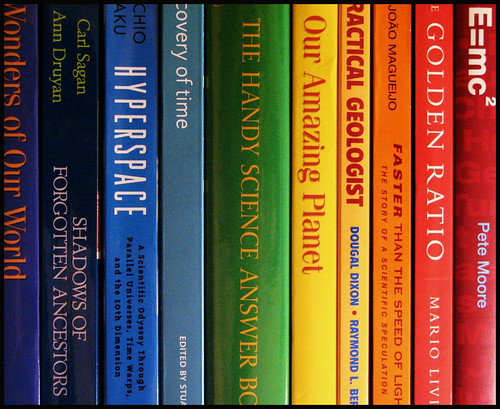
A Rainbow or Just a Pretty Pile of Books?

Blog and book as textual forms can both be thought of as publishing, but each has its own distinctive qualities, expectations we bring to the experience. Each has its own time. As we migrate our reading experience to networks and screens, the book (along with the magazine, journal, newspaper...) is defamiliarized. Now we consider the benefits and detriments of reading paper-and-ink rather than pixels or e-ink, and the old ways seem less natural and more contingent. Maybe now we can appreciate book time as we could not before, can think of how we might want book time to be integral to the experience of reading using our new technologies and interfaces and communities of knowledge. I think of book time as slow and careful time, as time for patient and immersive, even contemplative experience. I don't mean to essentialize too much, and I often use books as reference works, I read only the two pages I need, I skim, I photocopy one chapter, etc. But a book has the potential to have a certain temporal feel if you use it the way I'm thinking of.

My thoughts about book time and blog time are part of a larger fascination with temporality. Lately I've been strangely conscious of the temporal disunity and variability of my life, and in particular of the various forms of media creation and consumption that fill so much of it. I wrote about this last spring at Antenna, when I described the Wii as a time machine taking me back to a nostalgic ideal of my youth in which I have Nintendo games to play. I get a similar feeling watching TV with my kids. Noah, who is almost one, now pretty avidly watches Teletubbies. Seeing him become animated and giggly at the sight of the baby in the sun takes me back to the days when Leo, now six, used to watch it. Leo has reached an age that is familiar to me from my own memories of childhood, and taking him to school and soccer games and piano lessons inspires constant wistful reveries. Watching commercials with him for products he wants to have reminds me of my own lifetime of consumer desires and frustrations.

You must be less than this high to read this book

When I was writing Indie, I would sometimes imagine it as a finished product. At first I only imagined it as a printed monograph with a cover and paper pages pasted together, with my name on the spine, shelved in the N's in part of the library beginning PN199something (LoC). In the past couple of years I have begun to think of it more often as a product for sale at Amazon.com with the "click to look inside" feature. More recently I have started to imagine it as a searchable volume in Google Books, and as a downloadable e-book to be read on a tablet or e-reader. I have begun to think of phrases I use and names and titles that I reference that might come up in a web search. (Are books being search engine optimized yet? They should be.) I wonder if it will be published for the Kindle, and if so what might be the most highlighted passages?

Cinema Book Shop

All of this is of course forward-looking, anticipatory excitement. But much of my experience of writing and publishing a book is also marked by time lag. By early next year when Indie is out I will (God willing!) have submitted the manuscript of a second book, which I have been co-writing for the past couple of years with Elana Levine, called Legitimating Television: Media Convergence and Cultural Status. I imagine my feelings about Indie are similar to those of actors who have to go on talk shows to promote a film they shot a year ago, when their more recent work is more fresh in mind. I have to pretend that Indie is fresh as of 2011 when most of it was written at least two years ago, and some parts are from the early oughts. Compared with the instant gratification I have gotten from years of blogging -- you can read my thoughts moments after I write them, they can get a comment or link and it's all NOW -- the patience required by academic publishing is considerable. I have to perform my past self to greet the publication of this new product, and it's not that I'm lacking enthusiasm for the new thing but, well, it's not new to me, not at all. Having a book with my name on it is what's new, but the words and ideas are in the past.

Despite the frustration that comes from feeling this lag, I'm pretty pleased to have been patient. I like the form and expectations of the slow-paced book. I like its unique temporality. A book has its advantages in relation to an article or blog (and not just in its prestige/tenure functions), and even in its new digital formats a book should still maintain many of the things I like about it.

Someplace peaceful

In particular what I have in mind is the argument for books offered by Susan Wallace Boehmer, Editor-in-Chief of Harvard UP in this blog post called "Standing by the Book"

I will restrain myself from quoting the whole thing, but here are some good parts. What is it about books that Boehmer likes?

I like their length. I prefer ideas and opinions and narratives that are just too complicated, too nuanced, to fit into a New Yorker article, or a Wikipedia entry, or a series of public lectures. But at the same time, I like the boundedness of books—the sense you get at the end of 300 or 400 pages that you really have a good firm grip on the subject.


She also likes the book's

division into chapters. Chapters are not like essays. Essays—in a magazine, let’s say—relate to one another sort of the way out-of-town first cousins relate at a family reunion. They have polite conversations, and maybe you’ll notice a little family resemblance, but mostly they come together briefly and then they go away to live their separate lives. Chapters in a book relate to one another the way siblings do: every one of them is looking around at every other one, all the time, sizing them up and figuring out when to play together and when to get out of the way. A book with chapters is a tight-knit little family: there’s tension in every relationship, but they’re still all in it together.


(You really should go read the whole thing. There's a part about how a table of contents ought to be a poem, what a beautiful idea.)

Bookshelves

I also like the book's long-term temporality. There are books on my shelf that I have had for most of my life: a dictionary and a Bible that I used in grade school, an atlas I got when I was 13, children's books that my parents read to me as a little boy. I'm not very confident that the Kindle books I bought to read on my portable device will be accessible to me five or ten years down the road. E-books seem ephemeral to me, and old-fashioned paper books seem durable. But whether digital or not, a book is a pretty good way to make ideas last.

MANUSCRIPT

Photos, from top to bottom, are by flickr users ginnerobot, paper.clip, sapheron, simiant,, sapheron, gadl, and .michael.newman., used under creative commons licenses.

8/16/2010

I would get her so pregnant


Pete Campbell: I’m going to be a father.
His father-in-law: Can you believe it?
Mad Men viewers: uh, yeah!


Irony is one of Mad Men's most indispensible storytelling strategies. Irony is at home in many kinds of storytelling, but Quality TV benefits from one of the most essential effects of ironic narration: it requires that we "get it." It exploits the audience's special knowledge and competence, which the text flatters us for having.

Mad Men's irony comes in several varieties. This historical setting provides frequent “we know better now” bits, as in season one’s scene at Sally Draper’s birthday party when a man slaps a boy in the face--not his own child--for running in the house. Pregnant women smoke and drink, babies ride in cars unrestrained, middle-class picnickers litter conspicuously and without hesitation. Sexist and anti-semitic attitudes are simply there, unremarkable, and though Don seems to find Roger Sterling's blackface number in "My Old Kentucky Home" to be rather unpleasant, no one calls Roger out as racist or even seems to find such a display to want in taste. Our superior knowledge gives these bits much of their dramatic weight, allowing us to see the past as a more innocent but also less advanced era and anticipating the changes that made our world. Even our foreknowledge of historical events, like Kennedy's triumph over Nixon in the 1960 election, functions to give us the kind of insider knowledge that is the essence of ironic discourse.

Another form of ironic storytelling similarly depends on the superior knowledge of the audience, but depends on the familiarity of viewers with characters and storylines stretching back through the previous seasons. This is what high school English teachers tell us is "dramatic irony" of the sort we often find in Shakespeare, in which the hierarchies of knowledge set up by the narration invite the audience to view situations from multiple perspectives. It arises frequently in this week's episode in situations in which characters' speech unwittingly comments on their situation, but only to the extent that the audience knows more than the characters.

Ken Cosgrove, to Pete: Look how lucky we are. Another Campbell, that’s just what the world needs.

In this episode, focused especially on Pete Campbell and Peggy Olson, the most devastating ironies are those referencing the ongoing storyline in which Pete impregnates Peggy and she gives the baby up for adoption. Pete remains unaware of this development until late in season 2, when he confesses his feelings for Peggy and she tells him what really happened.


In "The Rejected" (my favorite episode of this season so far) we learn that Trudy Campbell, who we had thought might be infertile, is expecting a baby. This gives the writers all kinds of opportunities to subtly refer back to the Pete and Peggy storyline.

Pete: It feels much different from what I expected.
Trudy: How would you know what this feels like?


Eventually they get around to setting up the interaction we are most eager to see: Peggy addressing Pete having heard this news. But first a series of other scenes in which we observe characters who do not know of Pete's earlier paternity respond to the news. Invariably the developments have meaning that resonate with the central thematic preoccupations of the show, those with the power imbalances of gender and class distinctions. Peggy could not have borne Pete's baby openly and also pursued her career. It would have ended her working life, at least for many years. The product of Pete's legitimate parental expectancy, however, is a new $6 million account. He who has so much advantage gains more.

This disparity is made clear in the late scene of Pete and Peggy each going off on their own lunch outing, Pete with his male colleagues and his father-in-law and his business associate from Vick's, the new account, and Peggy with her new hipster friends from Life magazine. This distinction between corporate and creative power is a fine illustration of Bourdieu's distinction between economic and cultural capital, and of the ultimate inevitable subsurvience of the latter to the former.


The storyline around the research for Pond's reinforces the themes of the Pete/Peggy situation. Allison's public breakdown over Don's inattention following their post-Christmas-party tryst gives Peggy the opportunity to deny that her sexuality ever might have gotten in the way of her job prospects, and she berates Allison for assuming that Peggy would sleep with her boss and then find herself unable to get over him. Of course the situation with Pete was quite similar in the first season, and the ultimate repercussions much worse than what we suspect will be the case here. If season 1 Peggy had only had the courage Allison shows in telling Don that he's not a good person!

Peggy, to Allison: Your problem is not my problem. And honestly? You should get over it.

This plot also reintroduces Faye, the married professional market researcher, another model of femininity against which to judge Peggy. Faye's performance in the focus group scene, changing attire to blend in with the secretaries and removing her ring (which Don catches Peggy trying on, delicious moment), shows her adapting her feminine appearance to her situation with great confidence and effectiveness. By contrast, Peggy seems to struggle with the negotiation of gender norms in the workplace.

In relation to the two-way mirror scene of season one, much is now different. In the test group using Belle Jolie lipsticks, Peggy stands out as the one who doesn't want to be one of a hundred lipsticks in a box, and she impresses Freddie Rumsen with her observation that the trash bin containing the spent blotted lipstick tissues is a "basket of kisses." (He likens this turn of events, in which a secretary says something worth using in a sales pitch, to seeing a dog play the piano.) Now Peggy and Joan are on the other side of the glass and in positions of more power and authority, and Freddie complains that he has no office in which they can meet. Of course Peggy, Freddie's protege in earlier days, does have her own office (from which to peek at Don's in the best visual humor of the season so far).


The introduction of Joyce, the hipster lesbian photo editor at Life, offers Peggy an entree into a world antithetical to the corporate milieu of SCDP and Pete's in-laws. The line about Peggy's boyfriend renting her vagina recalls the prostitution trope of "Christmas Comes But Once a Year" and raises the idea of male control over female sexuality and reproduction. Had Peggy shamed Pete into leaving Trudy for her and raising their baby together, this experience would have been totally unavailable to her.

Peggy: Trudy’s pregnant?
Joey: I can’t believe that guy’s married to her. I would get her so pregnant.


Peggy and Pete are fated to be paired up for as long as Mad Men tells its story. In "The Rejected," many are rejected -- Joyce's photog friend, Allison, Clearasil, Joyce, Faye (I'm sure there are more). We can't forget as well that Peggy rejected Pete for her career and independence. The parallelism of these characters is reinforced by the two scenes of beating the head, first Pete's against the wall after learning of the Clearasil account, then Peggy's against the desk after learning of Trudy's pregnancy.


Peggy, to Pete: I just wanted to let you know how happy I am for you both.

And in the end they exchange these meaningful glances, which those of us who have been watching all along fill in with all of our accumulated Mad Men knowledge. We see these characters acknowledge one another, wordlessly recognizing all that has gone on between them, showing that they are in on the ironies we have been catching throughout. It's like the show is congratulating us for getting it, but with such subtlety that the forceful emotional impact of this resolution to the episode narrative is totally undiminished.


Mad Men tells its story very slowly and carefully. There are so many more ironic situations pregnant with potential for emotionally charged storytelling. Pete among others still knows about Don's identity, and Don and Pete know about Peggy's pregnancy. In a good serial narrative, the past is never dead or even past.

Update 8/17: cryptoxin appreciates MM's ironic mode too in a response to Jason Mittell's negative take on the show.